

The issue of car tires pulling sealer from concrete is referred to ‘Hot Tire Lift”. Most people assume that the hot tires are melting the sealer and causing it to peel. Heat is a factor in the cause, but the sealer is not melting. Once the tires start to cool they contract and literally pull at the surface of the coating. One of the main causes is using poor-quality epoxy coating. Using cheap water based epoxy kits is often the problem. These kits have a very low tolerance for heat: the epoxy can soften and delaminate under the weight of a tire that is contracting during cooling. It can then stick to the tire and then pull right off next time the vehicle is moved. The other and no less important factor contributing to hot tire lift is poor preparation of the surface prior to application of the coating. iCOAT…
Flooring Advice

Return to service or Back in service means that after replacement, repair or upgrade you can resume using the item which is repaired or improved. Time taken to Return To Service can be critical if it means that the down time experienced is causing financial loss or cost by the hour. iCOAT Polyurea flooring systems compared with other types of coating reduce downtime to a very manageable level.

Many clients contact us up to 12 months from coating their garage floor to discuss extending the coverage to the remainder of the house or selected areas. Because iCOAT coating systems are so good people soon realise there are quite a few benefits from installing inside the house. The cost of installing high quality carpet can range from $50 to $200 plus per metre and then it needs constant care and cleaning. With an iCOAT coating it is easy to maintain and looks fantastic with scatter rugs that can be updated for a different look anytime. Timber flooring, tiles and other forms can have ongoing care, repair and maintenance issues that just do not exist when you install iCOAT Polyurea coatings. iCOAT Polyurea is very shall we say Temperature Tolerant, it does not transfer cold from concrete and is cool in summer. At the same time they experience how the…

Polyurea is the latest advancement in coating technology, providing the best of all worlds. It is chemically resistant to salt, oil, petrol and other harsh chemicals. Polyurea is 98% more flexible and up to 20 times stronger than epoxy. It installs in less than half the time and is environmentally greener than most epoxy. Polyurea contains low Volatile Organic Compounds (VOC’s) and produces no toxic fumes during the application process. Polyurea whilst it costs a little more than epoxy this factor is often offset by the amount of time, labour and downtime it saves compared with epoxy. In the home the fact that you do not have to find alternate accommodation or pay storage costs during the curing time that you might with epoxy. iCOAT Polyurea is an extremely durable product, which was developed for and will withstand both ordinary and extraordinary wear and tear. I can not think of…


Every professional agrees that unless the proper preparation has been carried out it is extremely likely that whatever you set out to do could end up with disastrous results. This is very true in almost every task in life that you can think of. This is very much the case when it comes to applying a coating to a concrete floor. People these days are generally very well informed prior to making decisions and fortunately it is now relatively easy to do your research. Nobody likes to throw money away and we all want value for our hard earned cash. Doing your research is all well and good but how do you know if you are receiving the best advice and are you being given enough information to enable you to make correct informed decisions. Let me give you an example related to coating a concrete floor. There are a…

The floor coating industry is a specialist field and it takes a lot of experience to get the promised finishes. The industry is not governed by legislation and has attracted quite a few “fly by night” operators who have done a quick low cost job and been long gone when the problems arise. So here are a few tips before selecting an applicator. Beware of the operator who claims to do many types of work. We are a company who specialises in concrete floor coatings. That is all we do and we do the best job in our field. We have been here for well over a decade and we are not going anywhere. No insurances then no acceptance of the quotation. Insurance is so very important these days and unless your applicator has you covered for any possible damage to your property then there is a risk. Public…

What is VOC in Epoxy? A VOC (Volatile Organic Compound) is a solvent that gets released into the air as the epoxy cures. Some Epoxy contains cheap fillers or diluents, which are included to make the product cheaper, which would cause VOC’s to emit into the air. High amounts of exposure to epoxy fumes before and during the curing process can lead to sensitisation and asthma. Thus the term “Cheap and Nasty” seems to fit. On the other hand Polyurea coatings have near-zero VOC’s. You could say without fear of criticism that Polyurea are the “Green” coatings.
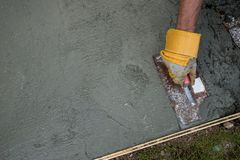
The term “Green Concrete” refers to a freshly poured concrete mix that has begun to set, but has not yet fully cured. The general industry recommendation is that it be allowed a minimum 30 day cure period before applying any resinous coating system. However, this is really a guideline, the actual wait period can be much longer, depending on the composition of the concrete mix, relative humidity, temperature and other conditions. Don’t be rushed into making a decision to coat your concrete surface without knowing that it has cured sufficiently to maintain a strong bond. New concrete can look dry well before it is ready to be coated. As a result of the concrete mix, site conditions, different areas of the slab may have varying levels of moisture. Therefore, proper testing of several areas for moisture/moisture vapour is the only valid way to tell if the slab is ready for…

What Is Concrete Laitance ? Concrete Laitance is a major cause of failure in flooring installations. Laitance is the weak, milky or powdery layer of cement dust, lime and sand fines that appear on the surface of concrete. The proper curing of concrete is very important Laitance becomes a problem when you plan to add a coating to the surface be it paint or any of the harder wearing surfaces available. No matter what you apply to your surface it will not successfully bond if the Laitance has not been removed and the surface properly prepared. Constant traffic, car tires, trolley wheels and so on will cause the laitance to move and the coating to lift. Until the Laitance has been removed by either diamond grinding or other mechanical means the surface should not be coated. Removing Laitance is critical to the success of your concrete floor coating. Call an…